
Trottiscliffe Kent England
Archaeological Overview & Excavation History
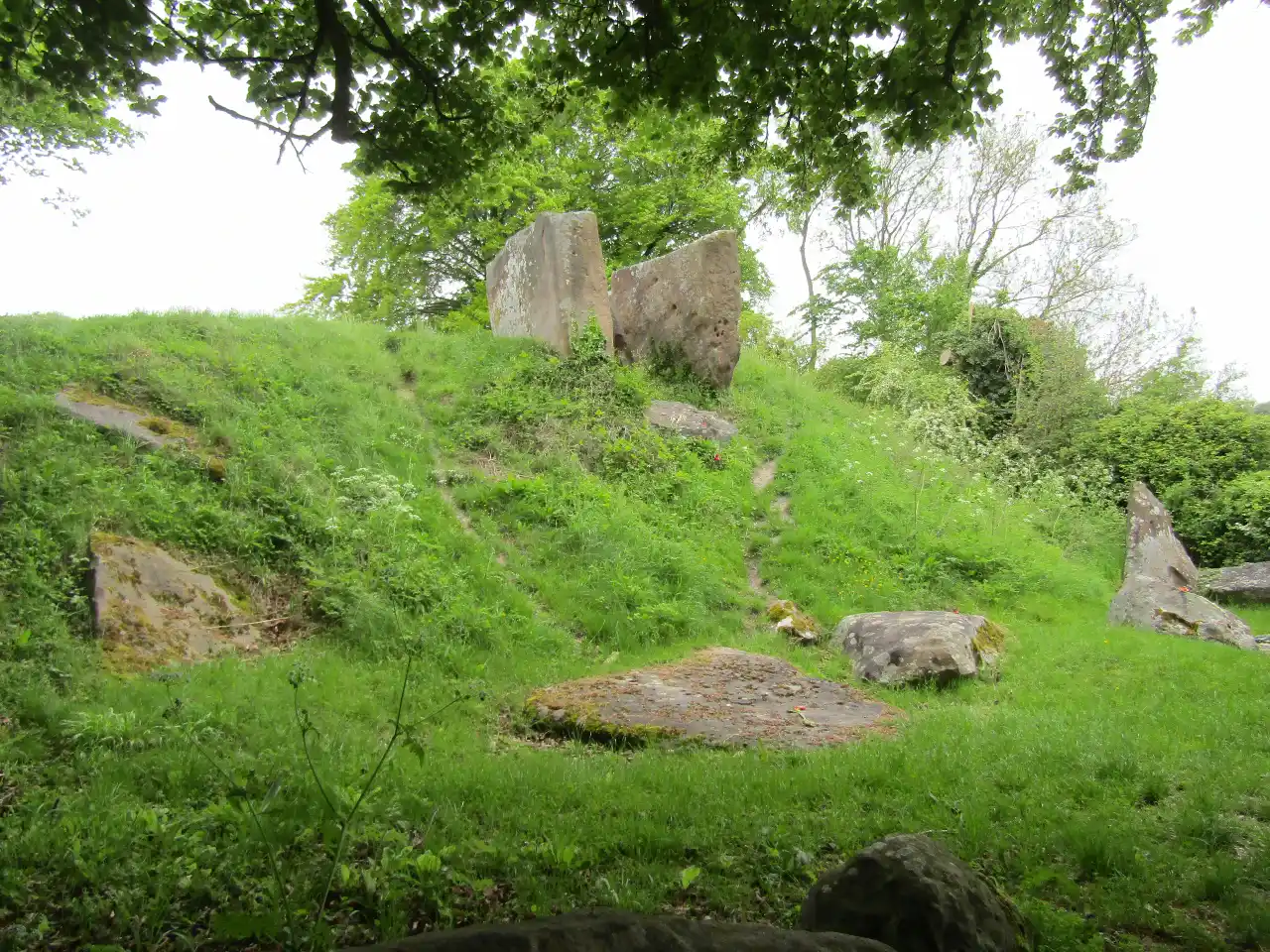
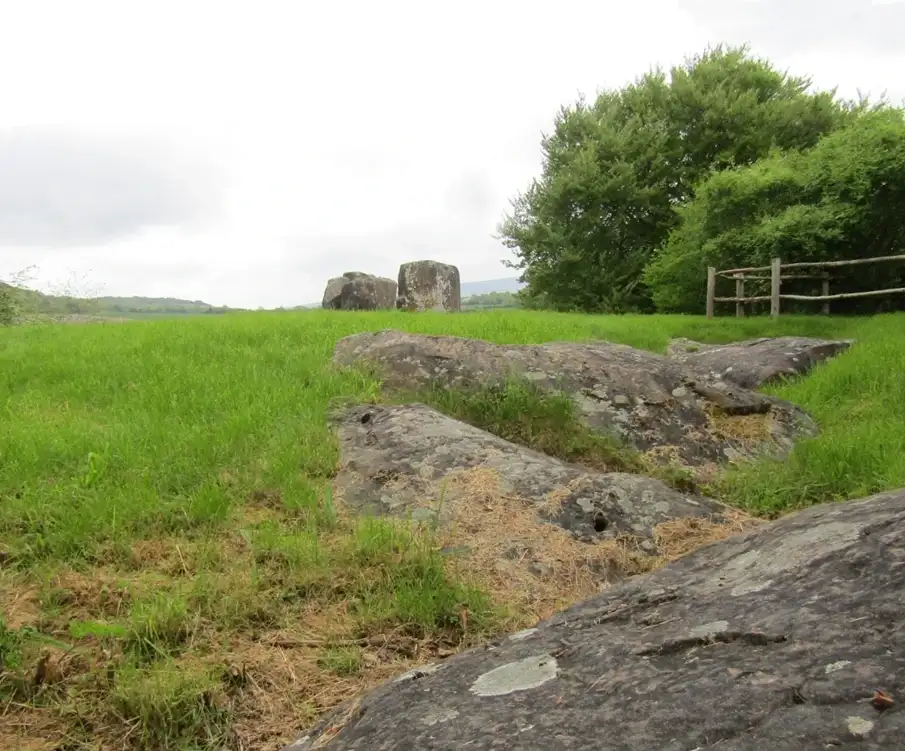
The earliest known excavation of the Coldrum Stone structure in Trottiscliffe, Kent, England, dates back to the 1800s. Following a poorly documented excavation in 1856 that recovered early pottery fragments, prominent late-19th-century antiquarians—including Benjamin Harrison and Sir Flinders Petrie—mapped and illustrated the site. While Harrison believed it was a stone circle, Petrie's precise measurements correctly identified that the perimeter stones actually formed a geometric, rectangular enclosure. (4)
A more thorough investigation of the central chamber in 1910 unearthed the remains of approximately 22 individuals, including men, women, and children, alongside a piece of pottery and a flint saw. Further human bones were uncovered during subsequent excavations in 1922.
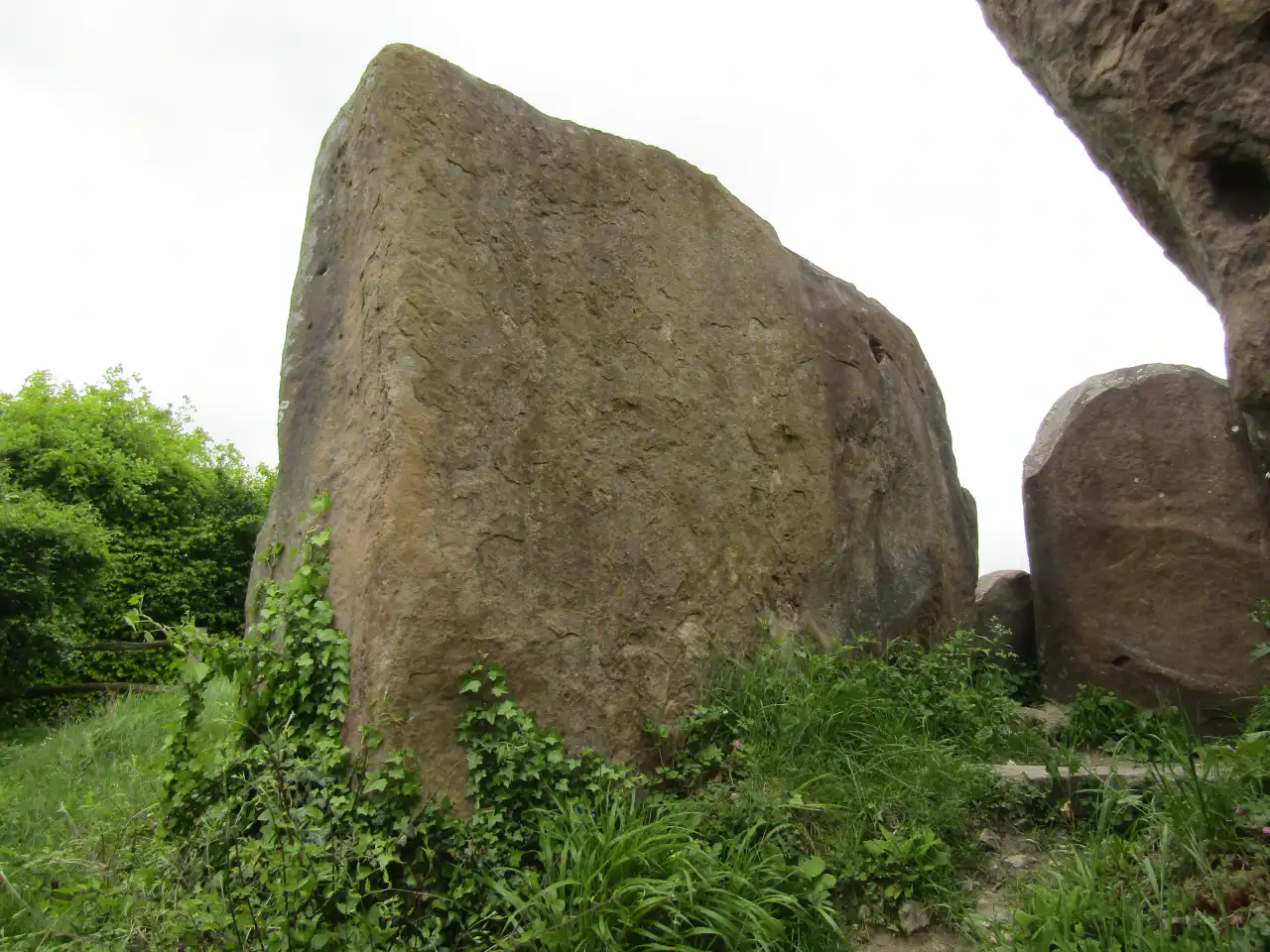
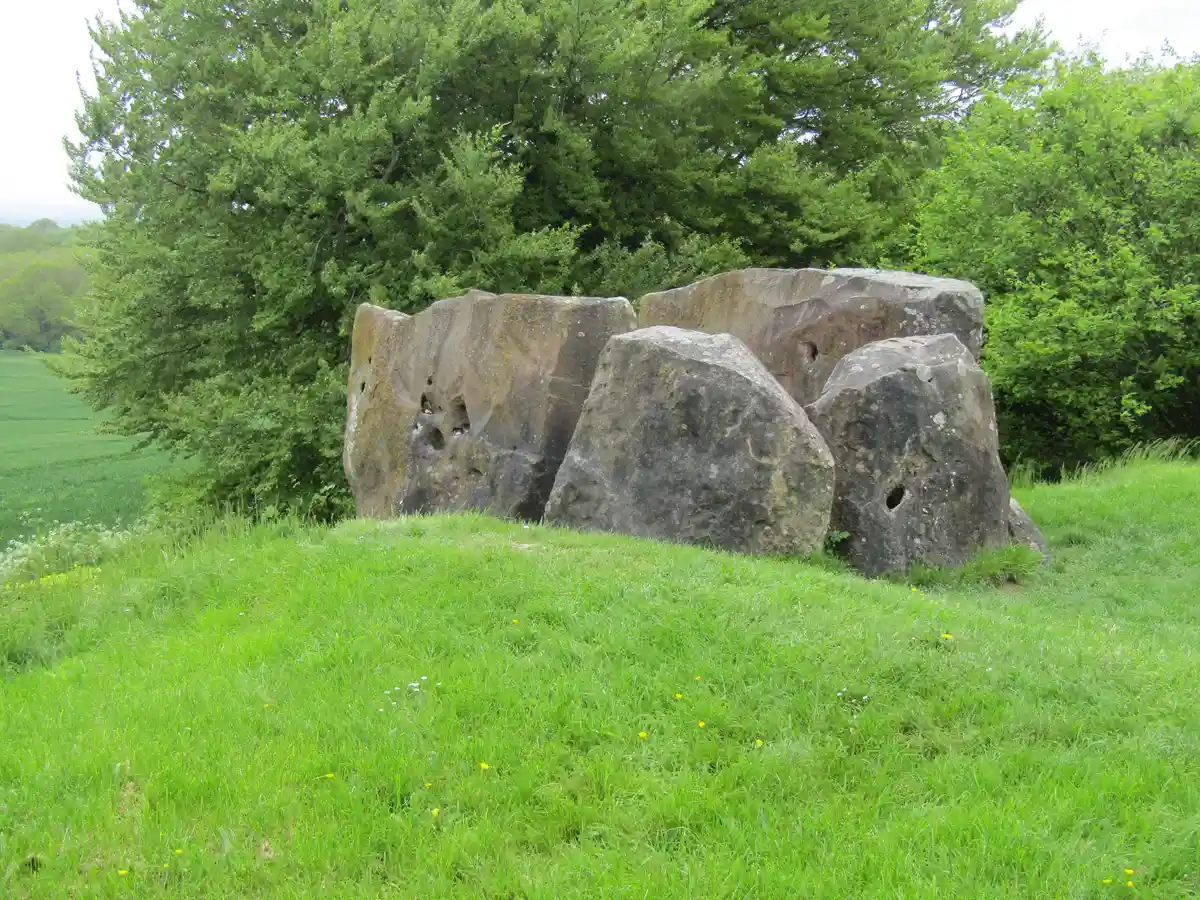
To modern archaeologists, this data fits a classical approach: a stone structure containing human bones must simply be a communal tomb built by those same people. Conventional archaeology glosses over the engineering challenges, accepting that these massive blocks were moved using nothing more than primitive, brutal manpower. When examining the site today, one sees a large, robust stone box constructed from massive sarsens (Mohs hardness of 7 out of 10)—a feature mainstream scholars label a "cist." It is important to note that archaeologists reject the term 'cist' for this site, labelling the sarsen structure as a burial chamber instead.
The Pre-Younger Dryas Hypothesis
Traditional history dictates that Neolithic people built this monument entirely from scratch. However, the sheer effort required for moving, lifting, and balancing these massive stones is arguably unthinkable for nomadic people working with primitive, prehistoric tools.
Instead, the physical evidence opens the door to the Pre-Younger Dryas Hypothesis. This theory proposes that an advanced, pre-cataclysmic civilization—existing prior to 12,000 BC—originally engineered the structure with a highly specific, technological purpose. Rather than a tomb, it was designed as an indestructible, armored vault intended to store and protect items of immense importance to them, within the stone cist. The massive, immovable stones were deliberately placed to securely seal this vault.
veneration of the ancient
When the global cataclysms of the Younger Dryas devastated the Earth, this advanced civilization was utterly lost, and their technological knowledge was forgotten. Thousands of years later, as nomadic Neolithic populations began to repopulate and roam the landscape, they stumbled upon these ancient, surviving ruins.
While these later cultures had no concept of the vault's original technological or structural purpose, they clearly recognized the immense power and architectural greatness of what had been left behind. Engaging in what can be described as the veneration of the ancient, they viewed it as a sacred, supernatural place. They occupied the structure, eventually adapting it and utilizing it to bury their own dead millennia after the original vault was first sealed.
The video and photographs belong to AwE130; nonetheless, you are allowed to utilize them free of charge for non-commercial purposes, as long as you include a link back to this page as the source.
The legends
The Secret Treasure Tunnel
A long-standing rumor, passed down through generations, indicates that a hidden underground tunnel runs from the Trottiscliffe parish church straight into the core of the Coldrum stone barrow. The legend claims that a massive, forgotten treasure is sealed away deep inside this tunnel. (3)
In the context of the Pre-Younger Dryas Hypothesis, this "treasure" legend is highly revealing. It shows that even thousands of years later, the local population maintained a collective memory that the massive stone cist was not built to be a standard graveyard, but was engineered specifically as a secure, protective container designed to safeguard something of immense value. (3)
The Name Coldrum: "The Place of Enchantments"
The very name "Coldrum" carries an intriguing magical legacy. Local etymologists suggest that its origins are not linked to a modern farm, but rather stem from an ancient language variant, "Galdrum." Rooted in Old English and Germanic origins, this translates directly to a place of magic, spells, and supernatural energy—often interpreted historically as "The Place of Enchantments." (1)
Lacking the technological vocabulary to describe advanced engineering, lifting, and balancing large stones, they concluded that the structure could only have been manifested through literal incantations and magic. By naming it Galdrum, they permanently marked the landscape as a zone of superior, unearthly power.
(1) Place of Enchantments (2) Coldrum (3) Tunnel (4) Shape Stone Structure