
Lower Kit's Coty (Kent England)
Archaeological Overview & Excavation History
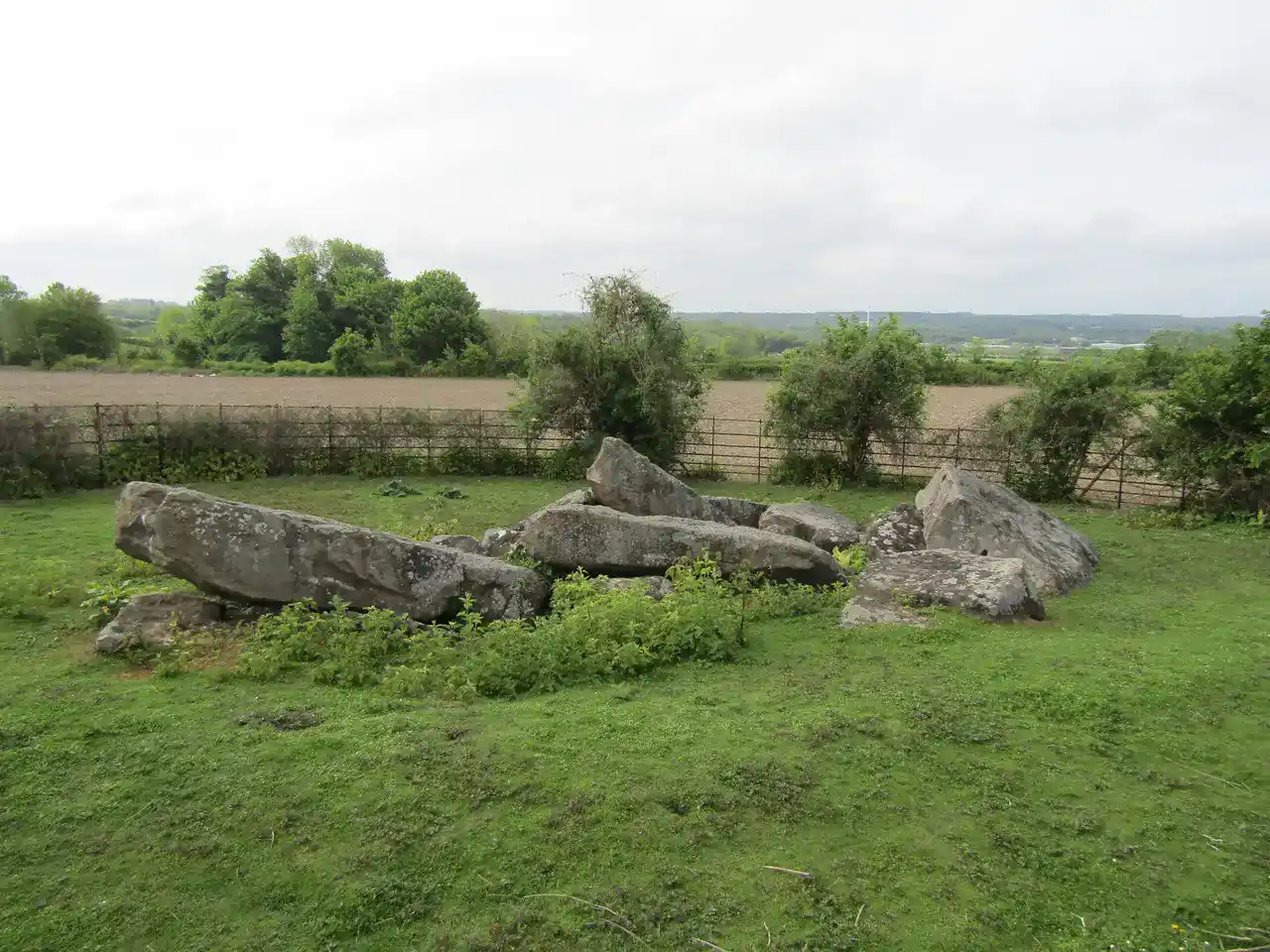
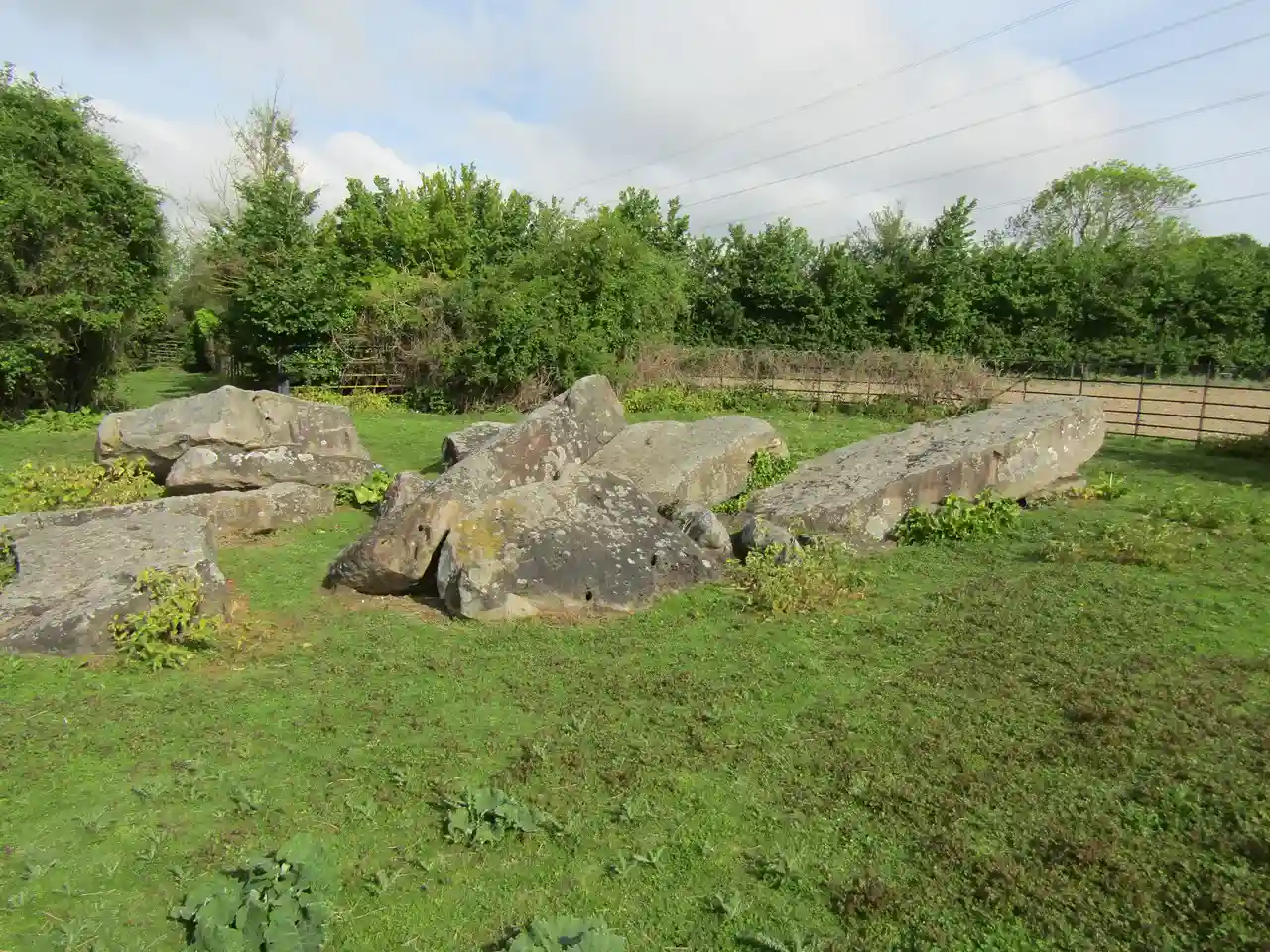
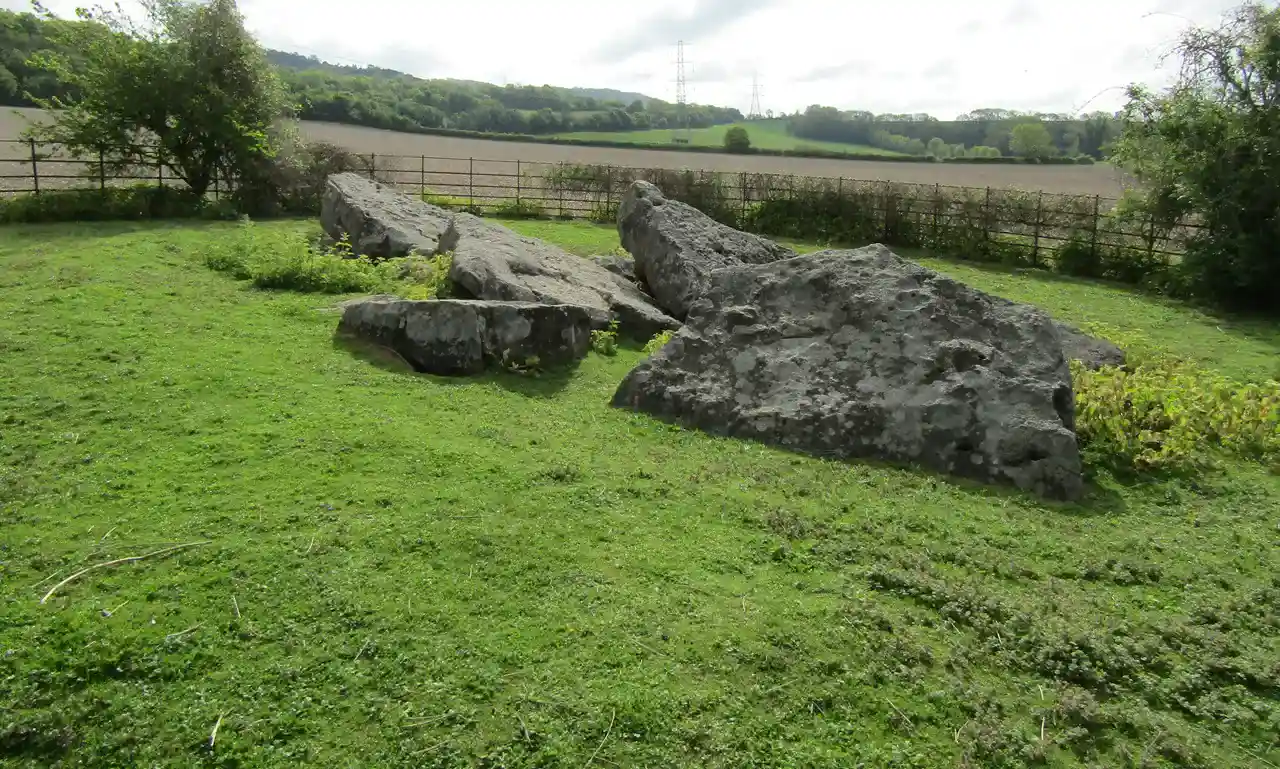
Located half a mile south of Kit's Coty, a jumbled heap of 19–20 sarsen stones is all that remains of this structure. In the 18th century, these stones were less ruined, and Stukeley (1) shows them in a D-shaped setting.
The Demolition
The tomb's earthen mound and neat structure were severely damaged and intentionally pulled down around 1690. This occurred before anyone, including Stukeley, could make detailed architectural maps (2). A rare description written shortly before the destruction notes that the monument originally featured seven standing upright stones fully covered by a massive single capstone (3).
Human remains and pottery were found under some of the fallen sarsen stones, dating back to the Neolithic period. A piece of armour used in burials was also found, dating back to the Anglo-Saxon or Roman period. This shows that the structure was used for thousands of years by people as a burial place. However, this tells us nothing about the original builders of the megalithic structure; it only shows that people were using the megalithic structure of Lower Kit's Coty for thousands of years, but nothing indicates that any of them were the actual builders.
The Pre-Younger Dryas Hypothesis
Traditional history dictates that Neolithic people built this monument entirely from scratch. However, the sheer effort required for moving, lifting, and balancing these massive stones is arguably unthinkable for nomadic people working with primitive, prehistoric tools.
Instead, the physical evidence opens the door to the Pre-Younger Dryas Hypothesis. This theory proposes that an advanced, pre-cataclysmic civilization—existing prior to 12,000 BC—originally engineered the structure with a highly specific, technological purpose. Rather than a tomb, it was designed as an indestructible, armoured vault intended to store and protect items of immense importance to them. The massive, immovable capstones were deliberately placed to securely seal this vault.
Veneration of the ancient
When the global cataclysms of the Younger Dryas devastated the Earth, this advanced civilization was utterly lost, and their technological knowledge was forgotten. Thousands of years later, as nomadic Neolithic populations began to repopulate and roam the landscape, they stumbled upon these ancient, surviving ruins.
While these later cultures had no concept of the vault's original technological or structural purpose, they clearly recognized the immense power and architectural greatness of what had been left behind. Engaging in what can be described as the veneration of the ancient, they viewed it as a sacred, supernatural place. They occupied the structure, eventually adapting it and utilizing it to bury their own dead millennia after the original vault was first sealed.
The video and photographs belong to AwE130; nonetheless, you are allowed to utilize them free of charge for non-commercial purposes, as long as you include a link back to this page as the source.
The legends
Antiquarians like William Stukeley popularized the idea that the Medway Megaliths were built by Druids as sacred temples. Locals believed the stones sat at the intersection of powerful "ley lines" (invisible Earth energy pathways) and that touching the central capstone during a full moon could grant a person visionary dreams or healing properties.
local folklore
The stones are not from a collapsed building, but are a group of living humans who were cursed and petrified (turned into solid rock) by an ancient spell. (5)
(1) William Stukeley (1687–1765) was an English physician and clergyman from the 18th century, recognized as a pioneering field archaeologist and antiquarian. He is often regarded as one of the founders of contemporary British archaeology. His meticulous sketches and measurements serve as essential records of ancient sites, documenting them prior to the changes brought about by modern agriculture, urban development, and industrial quarrying that have since altered or obliterated these locations. (2) demolished (3) Capstone (4) Druids (5) legend