
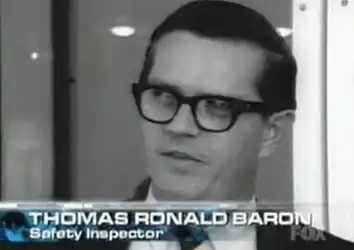
The Story of Thomas Baron
Apollo 1 Quality and Safety Inspections
In 1967, NASA was in complete disbelief when, on January 27th, the Apollo 204 (now better known as Apollo 1) caught fire during a simulation, resulting in the tragic deaths of the three astronauts on launch pad 34 at Cape Kennedy. What occurred, how could this happen during a simulation, and the most important question: was it preventable?
Over the past 59 years, a lot has been reported and repeated, but much of it is incorrect and misleading due to the passage of time and researchers who make assumptions rather than consulting the original sources.
There was a man who witnessed everything and attempted to alert others about an impending disaster. He submitted a report internally at North American Aviation (NAA), the contractor working for NASA on the Apollo command module, and even tried to catch NASA's attention. Unfortunately, it was all in vain as no one appeared to pay attention. This is the story of Thomas Baron, who served as a quality inspector for NAA at Cape Kennedy.
Thomas Baron became part of the Apollo program at Cape Kennedy in September 1965, taking on the role of a quality control and safety inspector. He brought previous experience from NAA, having worked for North American Aviation for just over two years as a calibration technician and console operator on the Hound Dog missile program at Eglin Air Force Base.
While working at Cape Kennedy, he began to observe discrepancies and reported them as part of his responsibilities. However, as time went on, he realized that hardly any action was taken regarding his reports. One instance of such a report he submitted is as follows:
Quote Baron:
"A technician was using a cigarette lighter to read the meters on the panel. This occurred at the base of the umbilical tower. I informed my leadman, but no action was taken whatsoever." (1*)
After making several efforts to improve the work environment, safety protocols, and the quality of craftsmanship at Cape Kennedy, Thomas Baron decided to leak a 55-page report to local journalists by the end of 1966. Consequently, he was dismissed on January 5, 1967. (2*)
Currently, the timeline is as follows:
- September 1965
- Thomas Baron officially began working at Cape Kennedy as a quality control and safety inspector for North American Aviation (NAA).
- November/December 1966
- After his internal warnings about shoddy workmanship and safety violations were ignored, Baron deliberately leaked his findings to newsmen. This initial document is the 55-page report (often miscounted in later official letters as 58 pages).
- January 5, 1967
- NAA officially discharged Baron. The company specifically cited his "irresponsible" act of leaking internal documents to the press as the grounds for his termination.
The Apollo 1 tragedy occurred on January 27, 1967, leading to multiple investigations by NASA, the Senate Committee on Aeronautical and Space Sciences, and the House Subcommittee on NASA Oversight. On February 7, 1967, Thomas Baron presented his detailed 275-page report to NASA's Apollo 204 Review Board, which is the official accident investigation board. It's important to note that at this point in the timeline, no other reports are cited in the primary source. Thus, we have a leaked report from late 1966 of 55 pages, along with a 275-page report that was submitted to NASA after the Apollo 1 tragedy on February 7, 1967.
The next mention of a report written by Thomas Baron appears in a letter dated April 18, 1967, from Floyd L. Thompson, who was the Chairman of the Apollo 204 Review Board. This letter was sent to Senator Clinton P. Anderson, the Chairman of the Senate Committee on Aeronautical and Space Sciences. The House Subcommittee on NASA Oversight, which conducted its own hearings including Baron’s testimony on April 21, 1967, later incorporated this letter along with the attached summary into the official hearing record as supplementary material. This letter specifically references a 58-page document titled "An Apollo Report," which Baron had prepared before February 7, 1967. It describes this 58-page report as an earlier, more succinct version that Baron developed, outlining the allegations that were first brought against North American Aviation, Inc.
Quote:
"The testimony before the Board and the 275-page document reiterated and set out in more detail the allegations originally made against North American Aviation, Inc., in the 58-page document." (3*)
According to the letter from Floyd L. Thompson, the Chairman of the Apollo 204 Review Board, the 58-page report addresses the allegations initially made against North American Aviation, Inc., which was referred to as the 55-page report. It seems quite possible that NASA miscounted the pages, and here is my reasoning. The letter mentions the 275-page report that Baron presented to NASA on February 7, 1967, and also refers to an earlier version that Baron originally wrote as 58 pages. However, the New York Times published an article on February 8, 1967 (4*), referencing a 55-page report (I am fairly certain the NYT possesses a copy of the 55-page report).
Quote NYT Article
"Mr. Baron submitted a 55-page report to NASA this week on what he said were workmanship problems, safety infractions and spacecraft contamination involved in Apollo 1. Details of the report have not been made public."
Furthermore, on April 21, 1967, Baron was very explicit during his sworn testimony regarding the reports he authored:
"Mr. BARON. No, sir. You are talking about the 55-page report. I am talking about the 500-page report."
Both the NYT and Thomas Baron confirm it was a 55-page report. Additionally, another source who had access to the earlier report is journalist and close friend of Wernher Von Braun, Erik Bergaust, who wrote the book "Murder on PAD34" in 1968. He quotes directly from the Baron report in his book and identifies it as a 55-page report. With three primary sources indicating it is a 55-page report, we can confidently conclude that the 58-page figure mentioned by NASA was indeed a miscount. This can happen; it's no real issue as we are all human.
The timeline:
- April 18, 1967
- Floyd L. Thompson wrote a letter mentioning a 58-page report, which appears to be a minor error since it is actually a 55-page report. This was not an intentional mistake at all.
- April 21, 1967
- Baron confirmed that the report was indeed 55 pages long (The New York Times had already clarified this in their article on February 8, 1967).
- 1968
- Erik Bergaust, who likely had a copy of the report, quotes it extensively in his book and speaks very highly of Thomas Baron.
What we have is a 275-page report submitted to NASA in February, along with a 500-page report referenced by Baron during his testimony. The key to understanding this lies in Thomas Baron's testimony, where he was fully aware he was under oath.
"Mr. BARON. No, sir. You are talking about the 55-page report. I am talking about the 500-page report."
The 275-page report is not mentioned by Baron and is most likely included in the larger 500-page report. In other words, he expanded the 275-page report into the 500-page document.
You may be wondering why I haven't mentioned the 169-page report that various websites refer to. The truth is, I've never come across a primary source to back that assertion, so it probably stems from a game of Chinese whispers.
A FOIA (Freedom of Information Act) request from 2013 aimed to obtain the release of a 55-page report from 1965–1966. NASA responded to this request by providing the document, which stands as the authoritative primary source regarding its length. (5*)
It is crucial to note that certain websites suggest that Baron supplied NASA inspector John Brooks with a 57-page report (7*) for duplication shortly before the Apollo 1 fire. However, this account seems to depend on later verbal recollections rather than the original documentation from 1966–1967. By emphasizing contemporary primary sources—particularly Baron’s own sworn testimony and the physical document confirmed by the 2013 FOIA release—we can ascertain that the 55-page report is the only historically accurate figure. Adhering to these original sources is the sole method to navigate through the 'Chinese whispers' and restore the factual record of Thomas Baron’s endeavors to avert the Apollo 1 disaster. It is also important to highlight that the official NASA history book from 1979, titled Chariots for Apollo (page 223), indicates that Baron provided NASA with a 55-page report.
Quote page 223: "When the tragedy occurred, Baron was apparently in the process of expanding his 55-page paper into a 500-page report."
In the end, the main point is that primary sources confirm that Thomas Baron correctly represented his reports. There is a 55-page report and a 500-page report; the 275-page report is authentic, but I think it was later incorporated into the 500-page report. Any other page numbers do not have backing from primary sources. Please feel free to reach out to me if you come across one; I would be happy to include it in this article.
I have one more thing to correct, and that is regarding the day of Baron's car accident. Many sources report that the accident occurred on April 27, 1967.
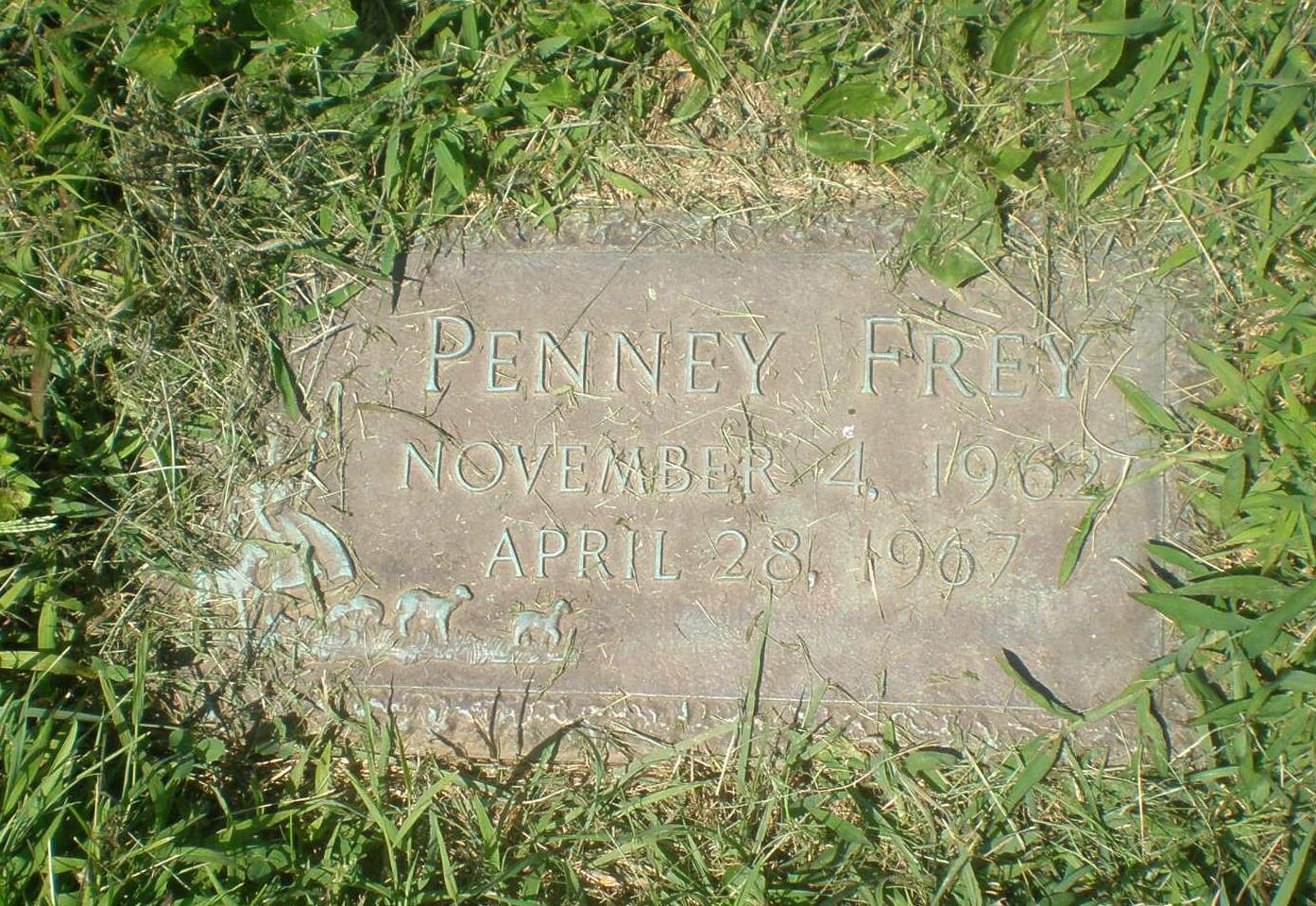
However, this is actually incorrect, the accident took place on Friday, April 28, 1967. This is backed up by newspapers that state the accident happened on a Friday, and the graves of Thomas Baron, his wife Marlene Baron, and his stepdaughter Penney Frey all bear the date of April 28, 1967. (6*)


(1*) An Apollo Report By Thomas Baron (2*) NASA web site 1966 (3*) Floyd L. Thompson Letter page G-16 (4*) New York Time (5*) FOIA 13-HQ-F-00362FOIA (6*) Graves (7*) The Hunches of Tom Baron