
Kit's Coty (Kent England)
Archaeological Overview & Excavation History
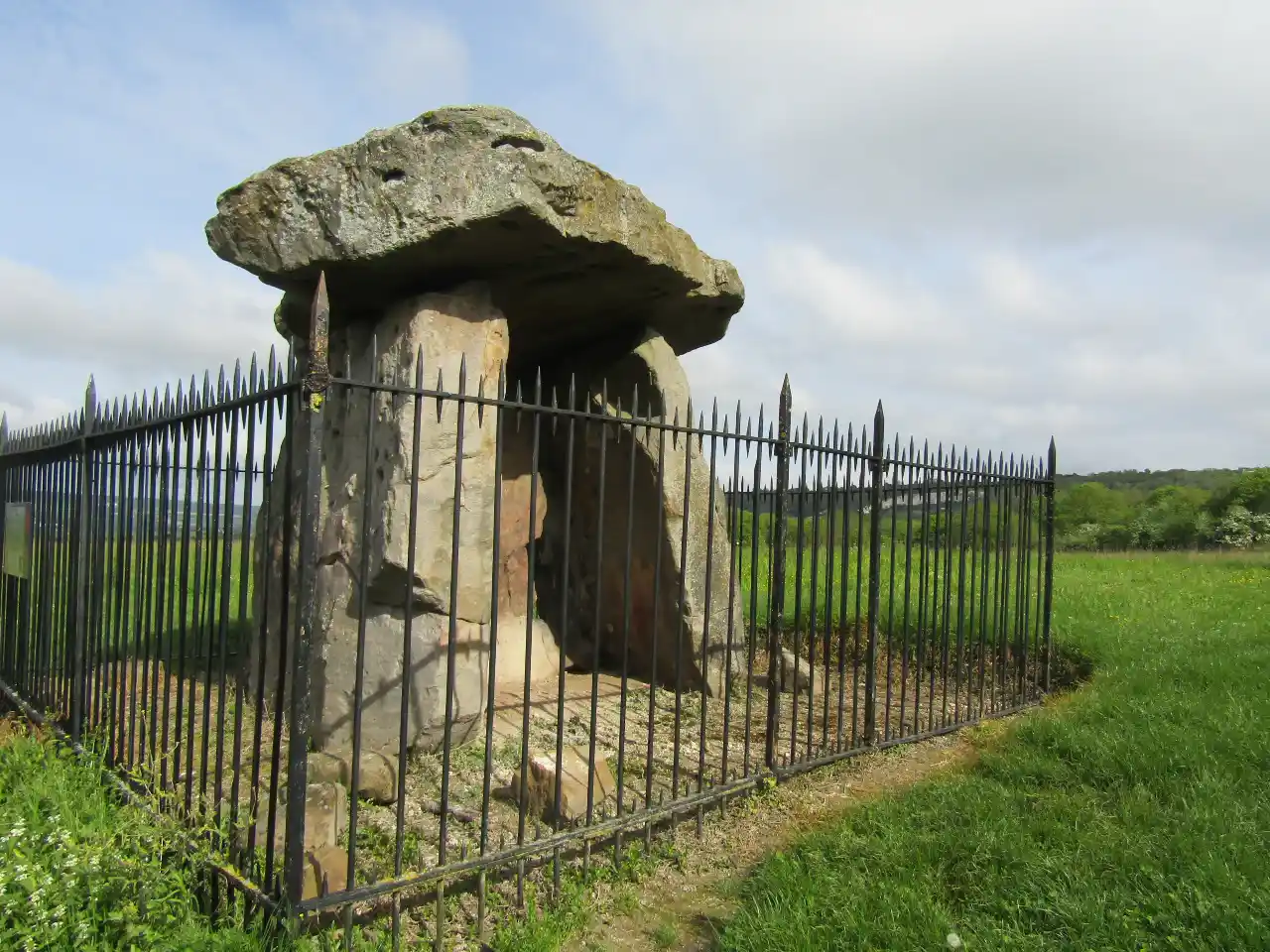
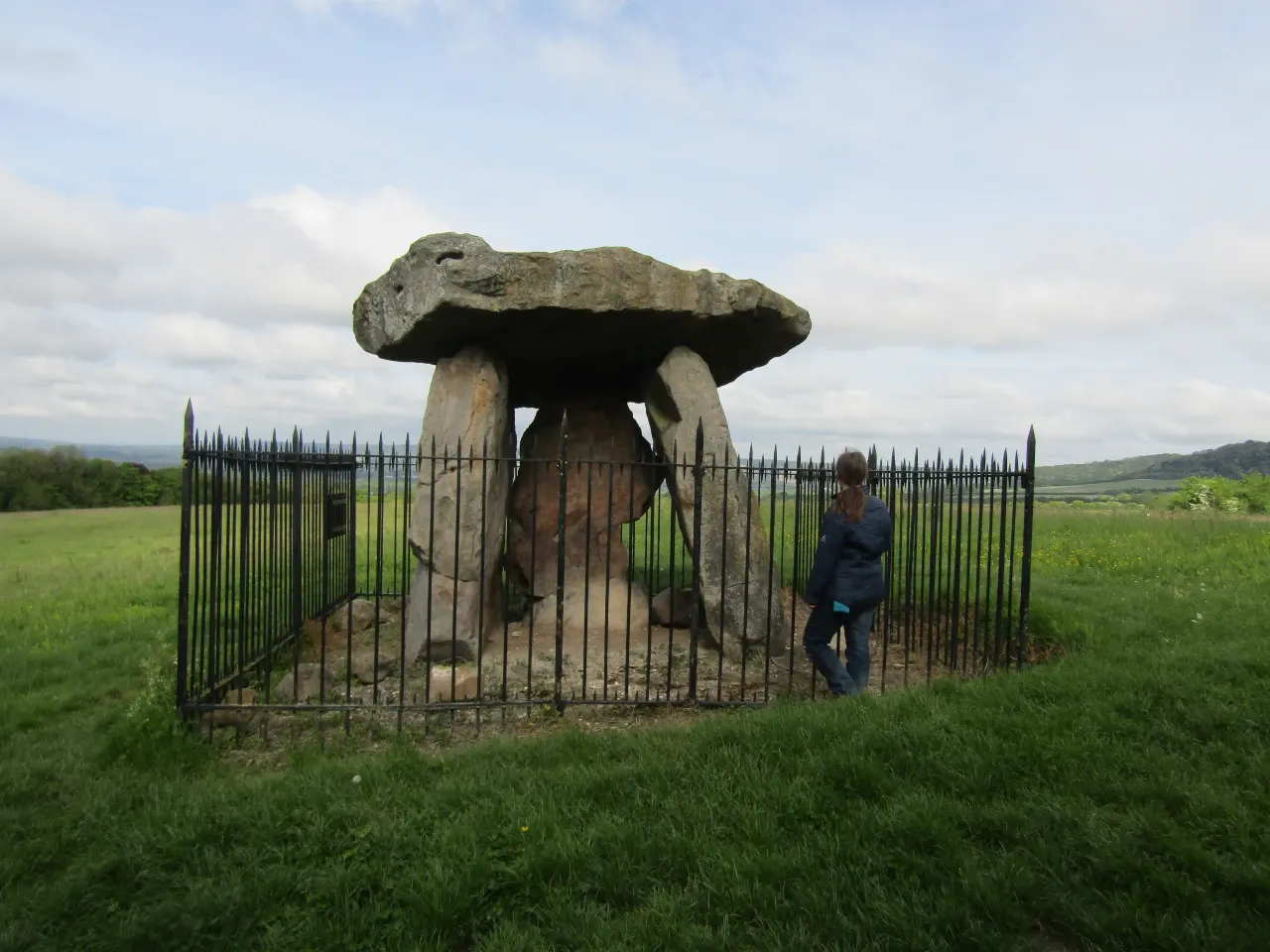
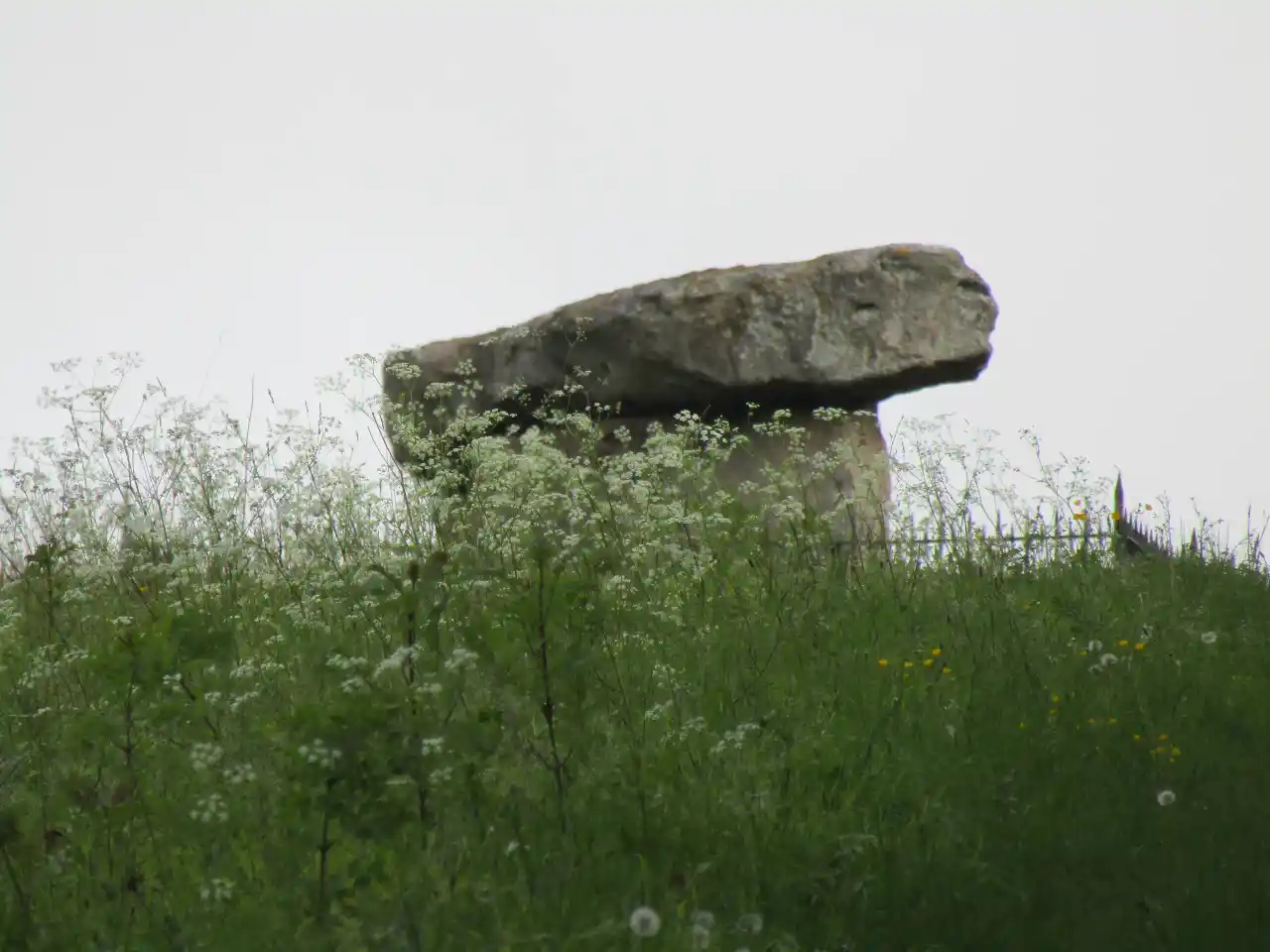
Kits Coty, also known as Kit's Coty House is a stone structure located 5½ miles south of Rochester. The mound of this structure has been so denuded by the plough that its original dimensions cannot be given. Eighteenth-century sketches by Stukeley (1) show that the mound was elongated and oriented East to West. At its east end there was a rectangular construction of which two uprights and a capstone survive (sarsen stones). Stukeley's sketch suggests that there was a megalithic structure at the West end also—unless the stone he showed represents the remains of a retaining wall.
1930s Discoveries
Although no complete skeletal remains were located within the primary stone structure, surface field-walking in the adjacent ploughed topsoil during the 1930s yielded fragmented and significantly worn pottery sherds. These artifacts were determined to be from the Early Neolithic period as well as later groups.
1956 Excavations
In 1956, archaeologists undertook focused trial excavations of the ploughed mound. This investigation validated Stukeley’s earlier hypotheses: they uncovered structural evidence indicating that the monumental earth mound had been securely reinforced and bordered by a sarsen stone kerb wall. This confirmed that the monument originally featured a highly structured, rectangular terraced design similar to nearby sites like the Coldrum Grave.
The Pre-Younger Dryas Hypothesis
Traditional history dictates that Neolithic people built this monument entirely from scratch. However, the sheer effort required for moving, lifting, and balancing these massive stones is arguably unthinkable for nomadic people working with primitive, prehistoric tools.
Instead, the physical evidence opens the door to the Pre-Younger Dryas Hypothesis. This theory proposes that an advanced, pre-cataclysmic civilization—existing prior to 12,000 BC—originally engineered the structure with a highly specific, technological purpose. Rather than a tomb, it was designed as an indestructible, armoured vault intended to store and protect items of immense importance to them, within the stone cist. The massive, immovable stones were deliberately placed to securely seal this vault.
veneration of the ancient
When the global cataclysms of the Younger Dryas devastated the Earth, this advanced civilization was utterly lost, and their technological knowledge was forgotten. Thousands of years later, as nomadic Neolithic populations began to repopulate and roam the landscape, they stumbled upon these ancient, surviving ruins.
While these later cultures had no concept of the vault's original technological or structural purpose, they clearly recognized the immense power and architectural greatness of what had been left behind. Engaging in what can be described as the veneration of the ancient, they viewed it as a sacred, supernatural place. They occupied the structure, eventually adapting it and utilizing it to bury their own dead millennia after the original vault was first sealed.
The video and photographs belong to AwE130; nonetheless, you are allowed to utilize them free of charge for non-commercial purposes, as long as you include a link back to this page as the source.
The legends
Battle-Lord
According to an oral tradition, the massive sarsen stones mark the definitive burial place of Prince Catigern, the son of the British King Vortigern. Catigern was a prominent British leader who was killed in hand-to-hand combat during the legendary Battle of Aylesford in 455 AD, fighting against the invading Anglo-Saxon mercenaries led by the brothers Hengist and Horsa. The Kit's Coty structure was his last resting place. (5)
Magical / Ritual
Local tradition held that if you placed a personal object (such as a pin, coin, or handkerchief) on the capstone and walked around the stones three times, the object would disappear or a wish would be granted. (4)
The Witches
A local folk tale tells that the stones were erected by three witches who lived on Blue Bell Hill. Having raised the huge upright stones, they found themselves unable to place the capstone in position and were forced to enlist the aid of a fourth witch. (3)
(1) William Stukeley (1687–1765) was an English physician and clergyman from the 18th century, recognized as a pioneering field archaeologist and antiquarian. He is often regarded as one of the founders of contemporary British archaeology. His meticulous sketches and measurements serve as essential records of ancient sites, documenting them prior to the changes brought about by modern agriculture, urban development, and industrial quarrying that have since altered or obliterated these locations. (2) Coldrum (3) The Witches (4) J.H. Evans, “Notes on the Folklore and Legends Associated with the Kentish Megaliths”, Folklore Vol. 57, No. 1 (March 1946), pp. 36–38. (5) legend