
Trethevy Quoit Cornwall
Archaeological Overview & Excavation History
Location: 2¾ miles north-east of Liskeard (A38, A390, B3254), ¾ mile north-east of St Cleer.
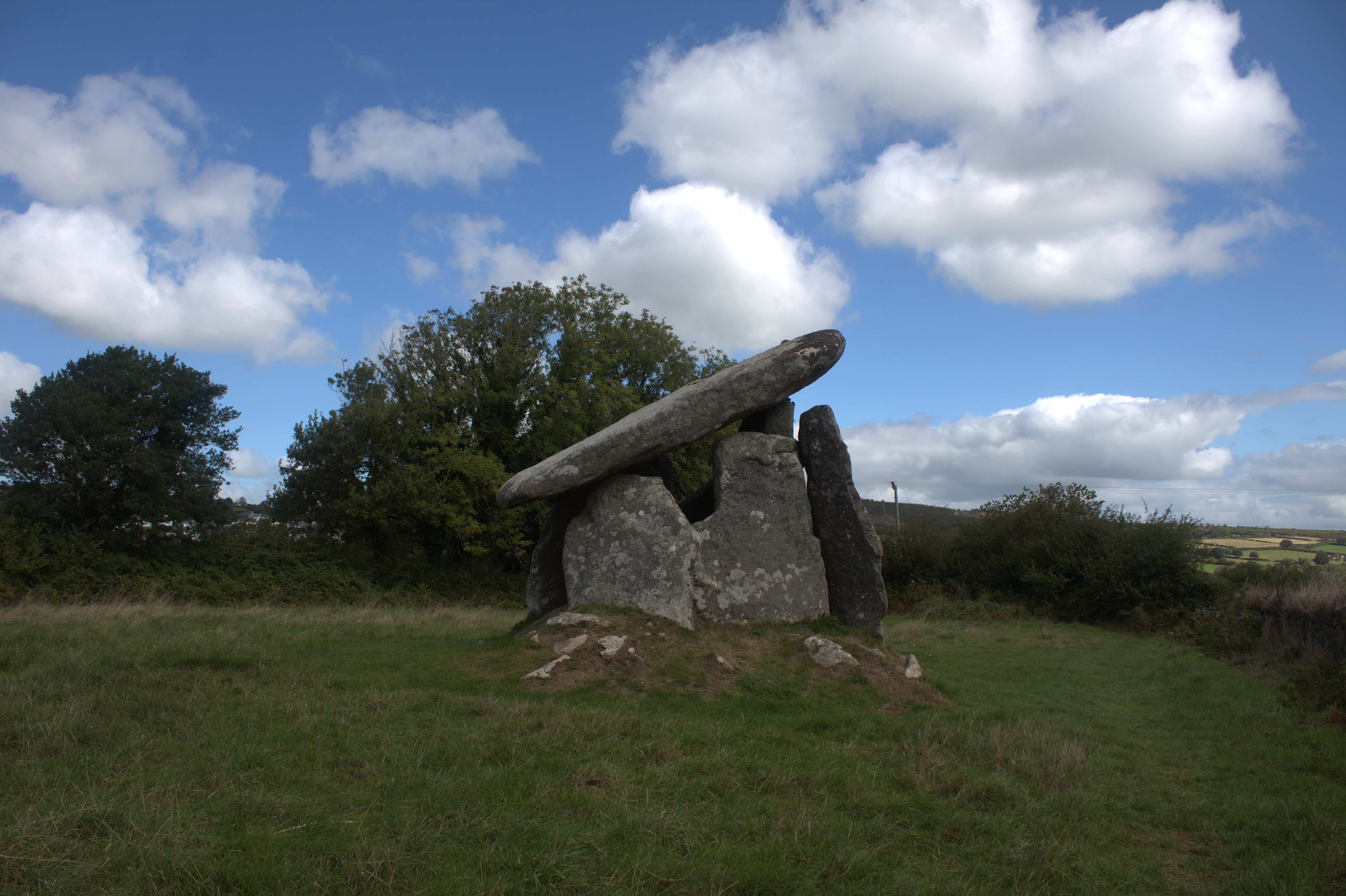
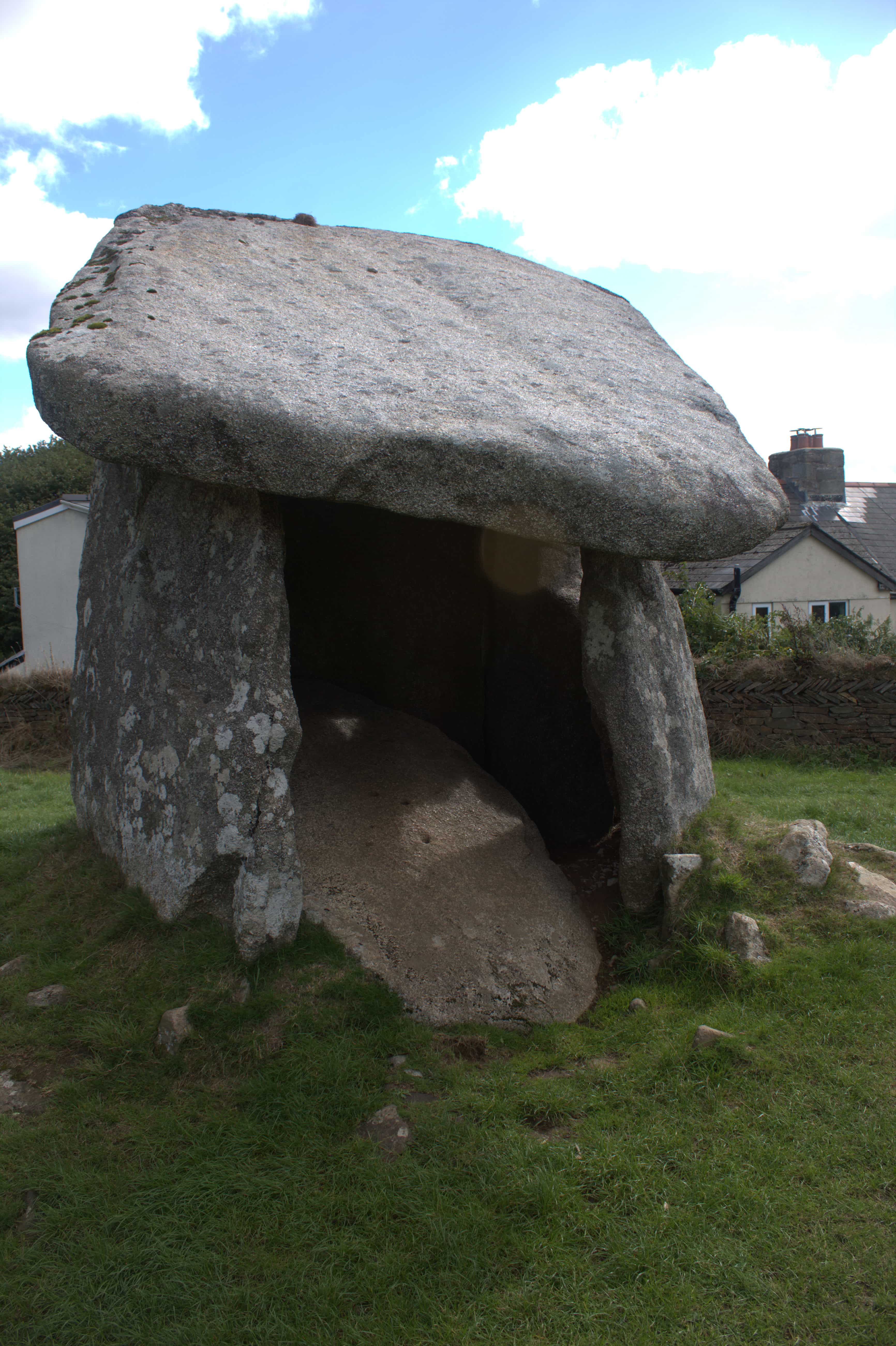
The monument is an ancient stone structure of eight stones, one of them a huge capstone, the others forming the sides of the chamber. One of these has fallen. The chamber is divided in two by one of the stones, a corner of this stone has been broken away so that access to the interior is possible. The capstone covers all the uprights. The structure was originally enclosed by an oval mound measuring 23½ × 20½ ft, recorded in the last century but now almost disappeared.
Excavation & Restoration
The site has been recorded since at least 1584 (John Norden). Antiquarians described it, but they did not excavate it systematically. In 2019 the Cornwall Archaeological Unit, working with the Cornwall Heritage Trust and volunteers, carried out a geophysical survey and dug test pits around the monument (not a full excavation of the chamber). They found a previously unknown platform of quarried greenstone (metamicrogabbro), about 10 × 25 m, leading from the quoit into the field. The stone had been brought from a local source and laid as a designed base for the tomb. The granite slabs of the quoit itself appear to come from a single outcrop, possibly in the Caradon Hill area, about 1.5 km away. No human remains were found.
A Modern Reflection
Even with all these good intentions, it remains baffling to think about. How can archaeologists—who were not there and cannot fully know the minds of the ancient builders—be so certain they know exactly what the monument represents?
The Pre-Younger Dryas Hypothesis
Traditional history dictates that Neolithic and Bronze Age people built this monument entirely from scratch. However, the sheer effort required to move, work, and lift these stones is arguably unthinkable for nomadic populations working solely with primitive, prehistoric tools.
Instead, the physical evidence opens the door to the Pre-Younger Dryas Hypothesis. This theory proposes that an advanced, pre-cataclysmic civilization—existing prior to 12,000 BC—originally engineered the structure for a specific purpose, rather than as a tomb or a place of worship.
When the global cataclysms of the Younger Dryas devastated the Earth, this advanced civilization was utterly lost, and their technological knowledge was forgotten. Thousands of years later, as nomadic Neolithic populations began to repopulate and roam the landscape, they stumbled upon these ancient, surviving ruins. Today, archaeologists find their remains or artifacts and conflate these two events, which were thousands of years apart, into one.
The video and photographs belong to AwE130; nonetheless, you are allowed to utilize them free of charge for non-commercial purposes, as long as you include a link back to this page as the source.
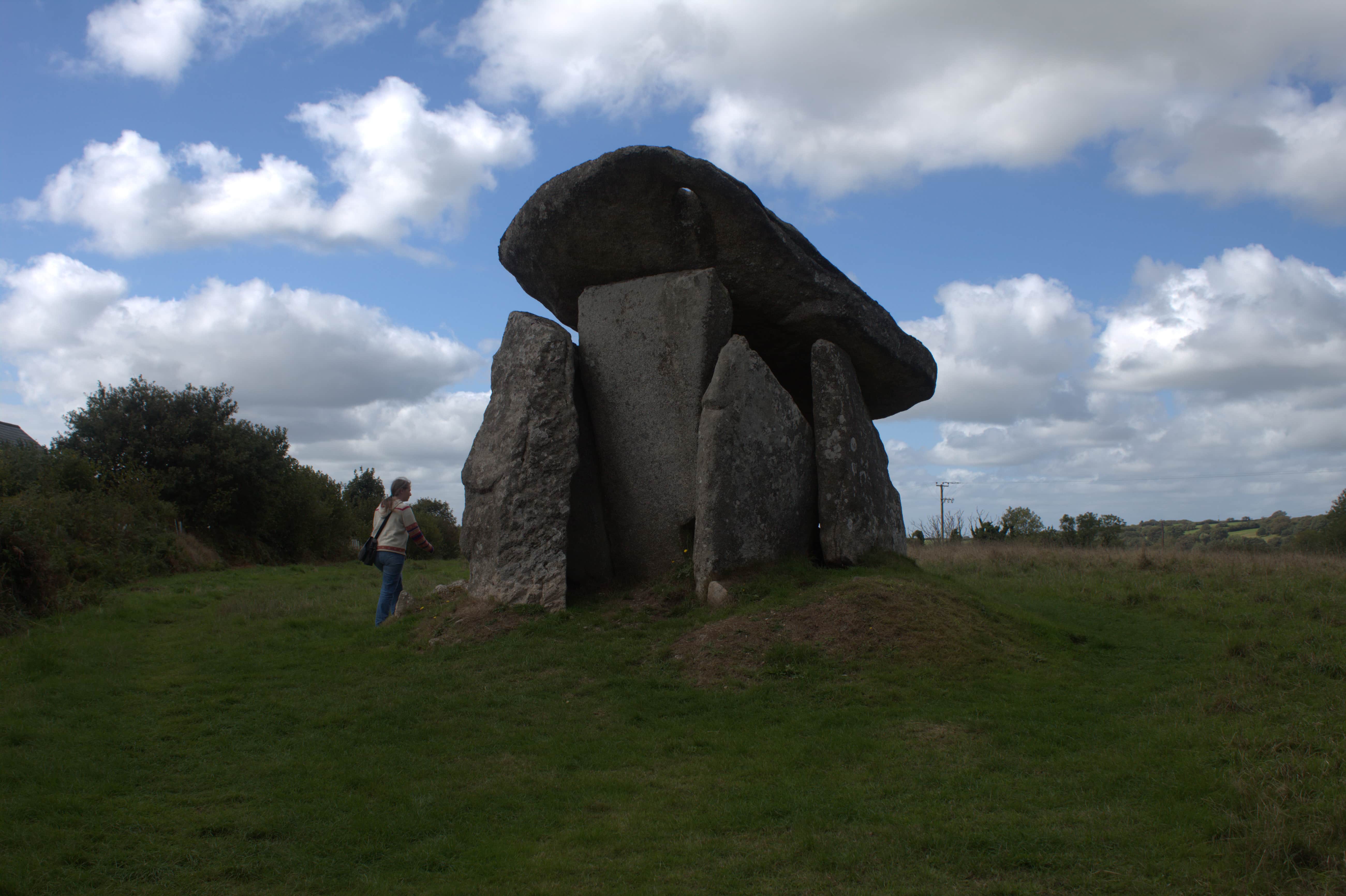
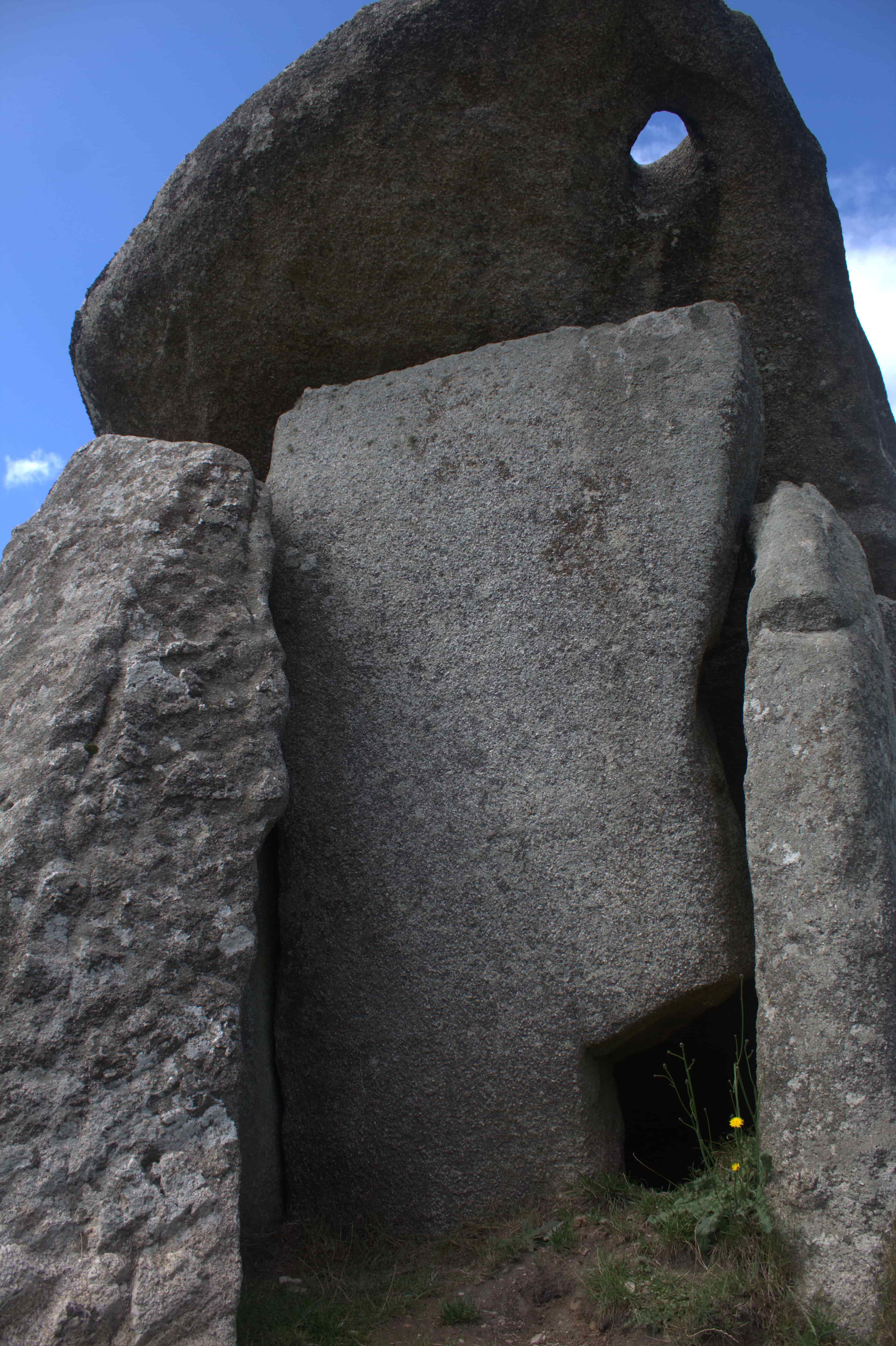
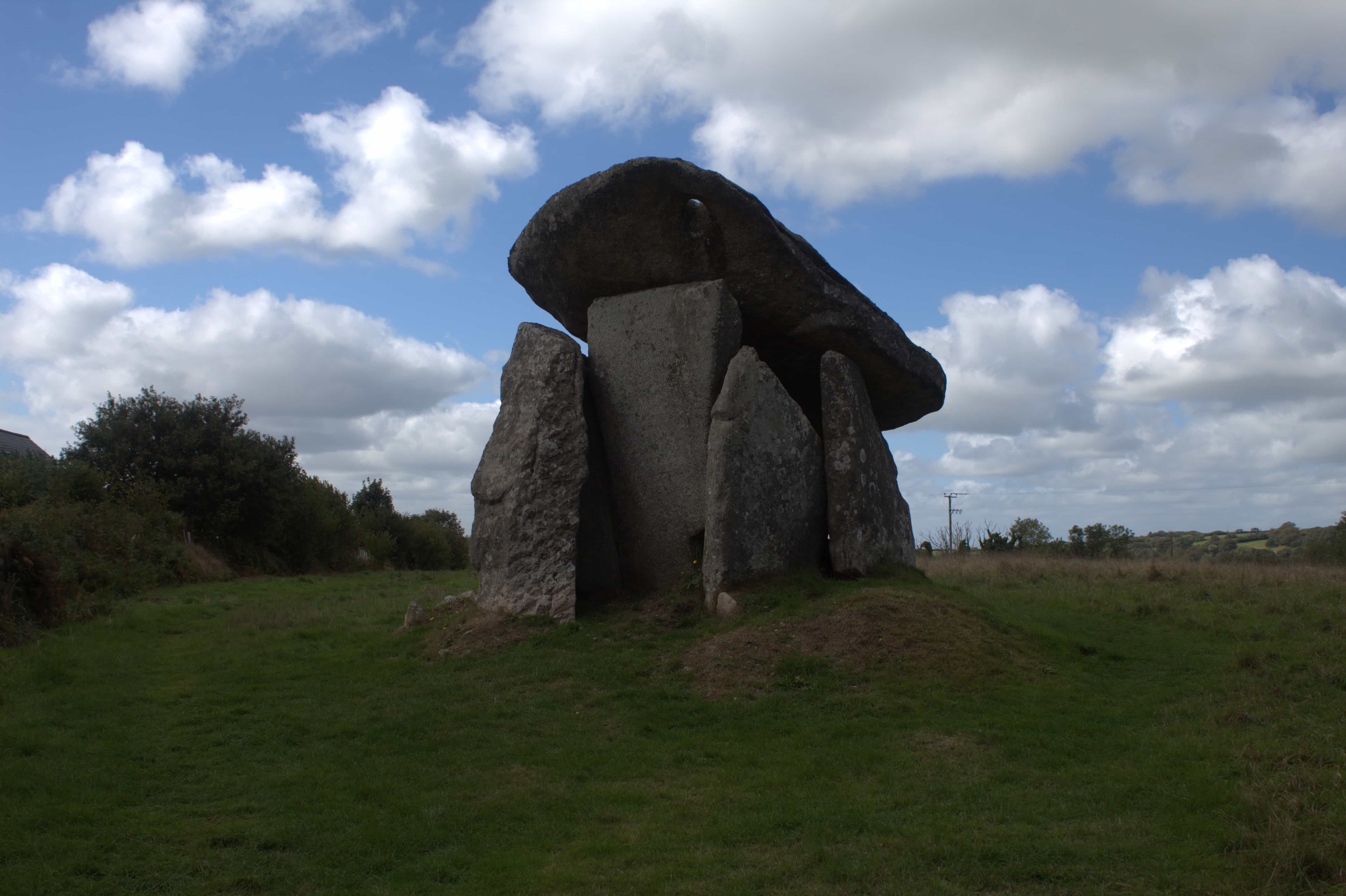
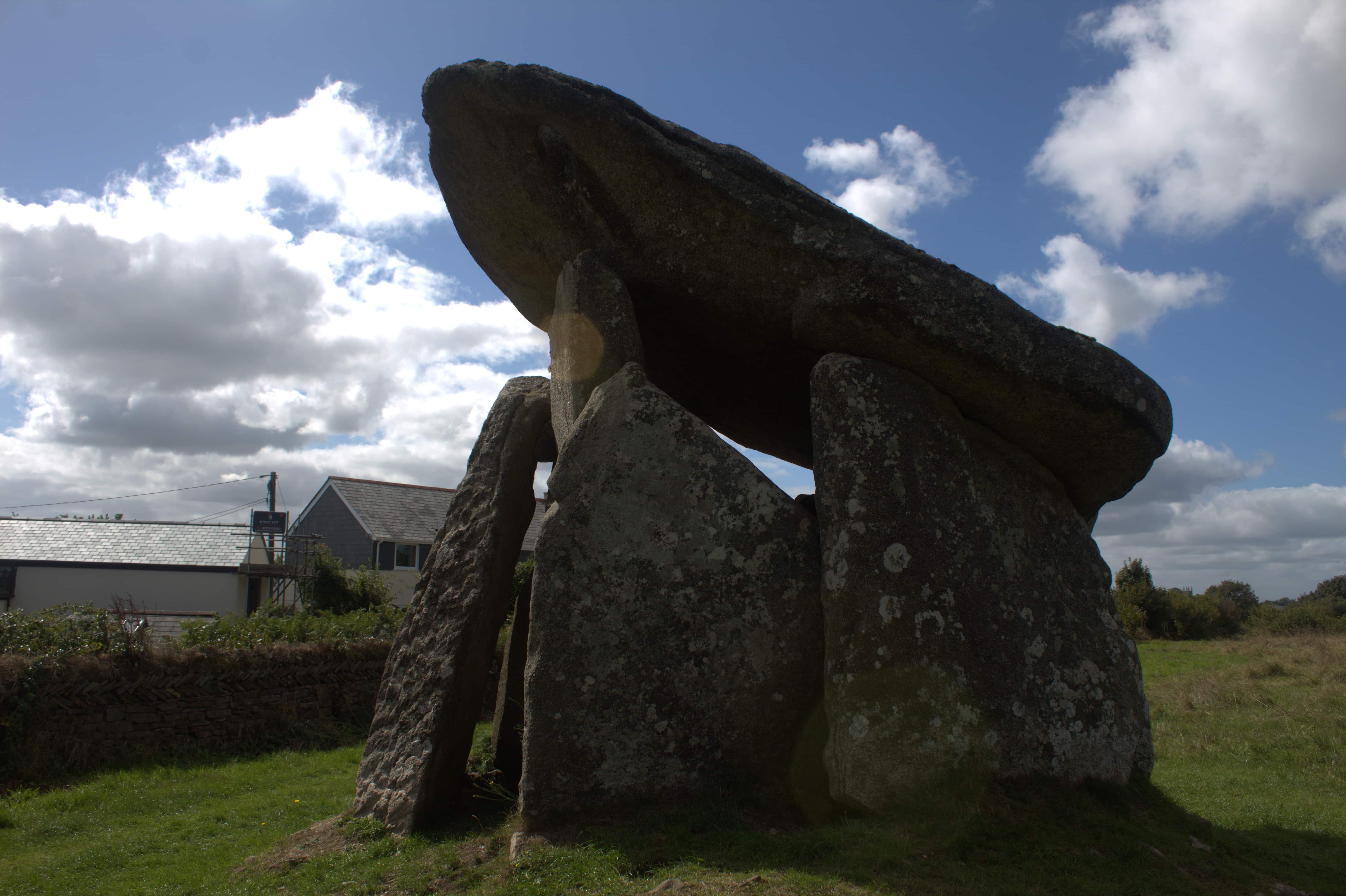

The legends
The Giant’s House
The strongest and oldest local name is the Giant’s House (Cornish Chi an Kowr). John Norden already treated it as a “little house of mighty stones” in the late 1500s, later writers simply said a giant built it or lived in it. That is the usual Cornish explanation for any impossibly large stone structure: giants carried or threw the slabs. The same idea is attached to other quoits (Lanyon, Zennor, Pawton). (2)
local folklore
Arthur and Merlin
Some later accounts call it King Arthur’s Quoit or say Merlin raised the stones by magic. Those links are weaker and more modern; they sit in the general Cornish habit of attaching Arthur to any impressive prehistoric site. There is no detailed local tale of a specific battle or burial of Arthur here. (3)
Other late or loose claims
A few popular write-ups mention a mythical king Gormund buried there, a Druids’ altar, or farmers fearing crop blight if the stones were moved. These are not well-documented traditional legends in the way the Giant’s House name is; they sit closer to 18th–19th-century antiquarian and tourist folklore.
(1) Excavation (2) The Giant’s House (3) Arthur and Merlin