
Willersley, Arthur's Stone
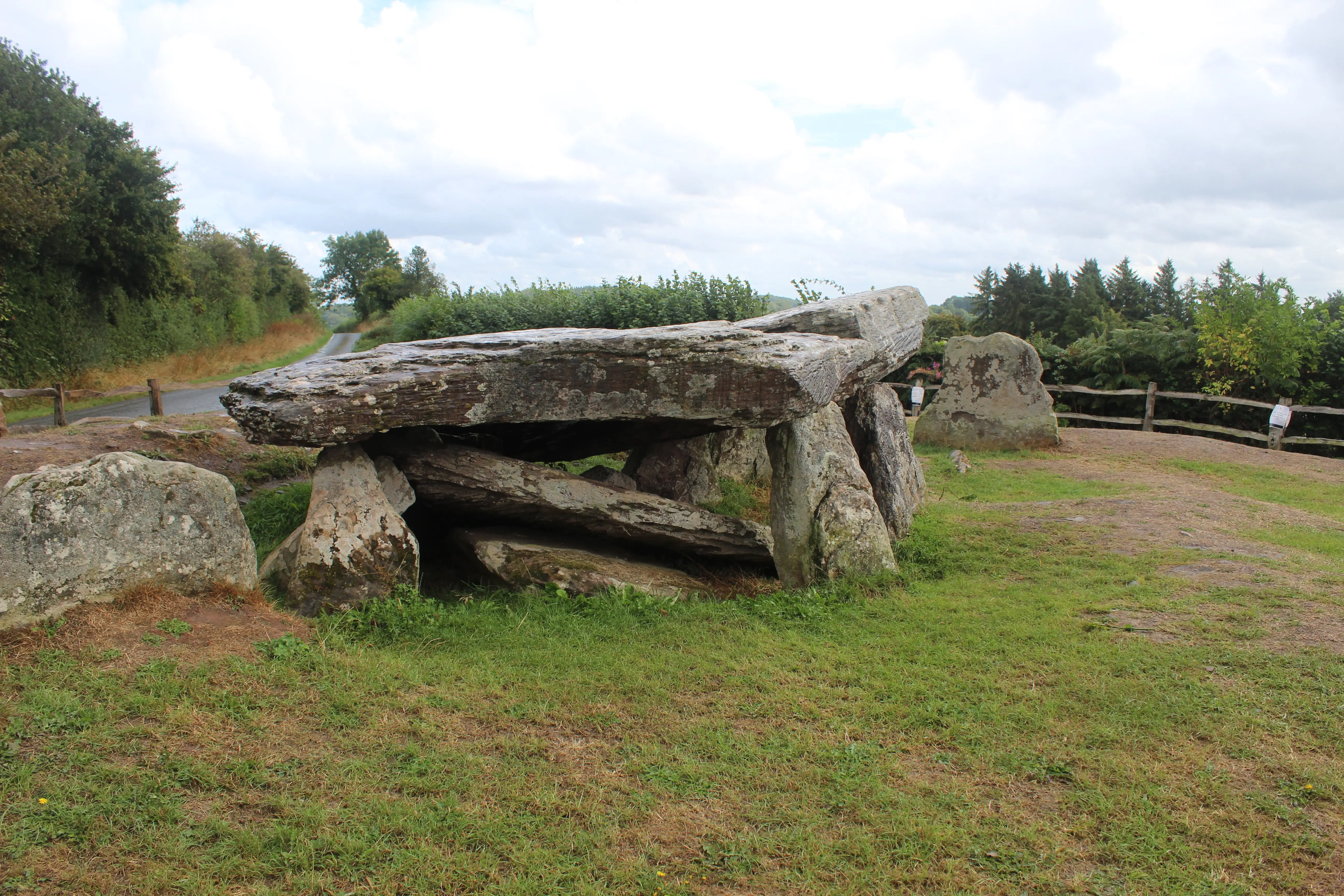
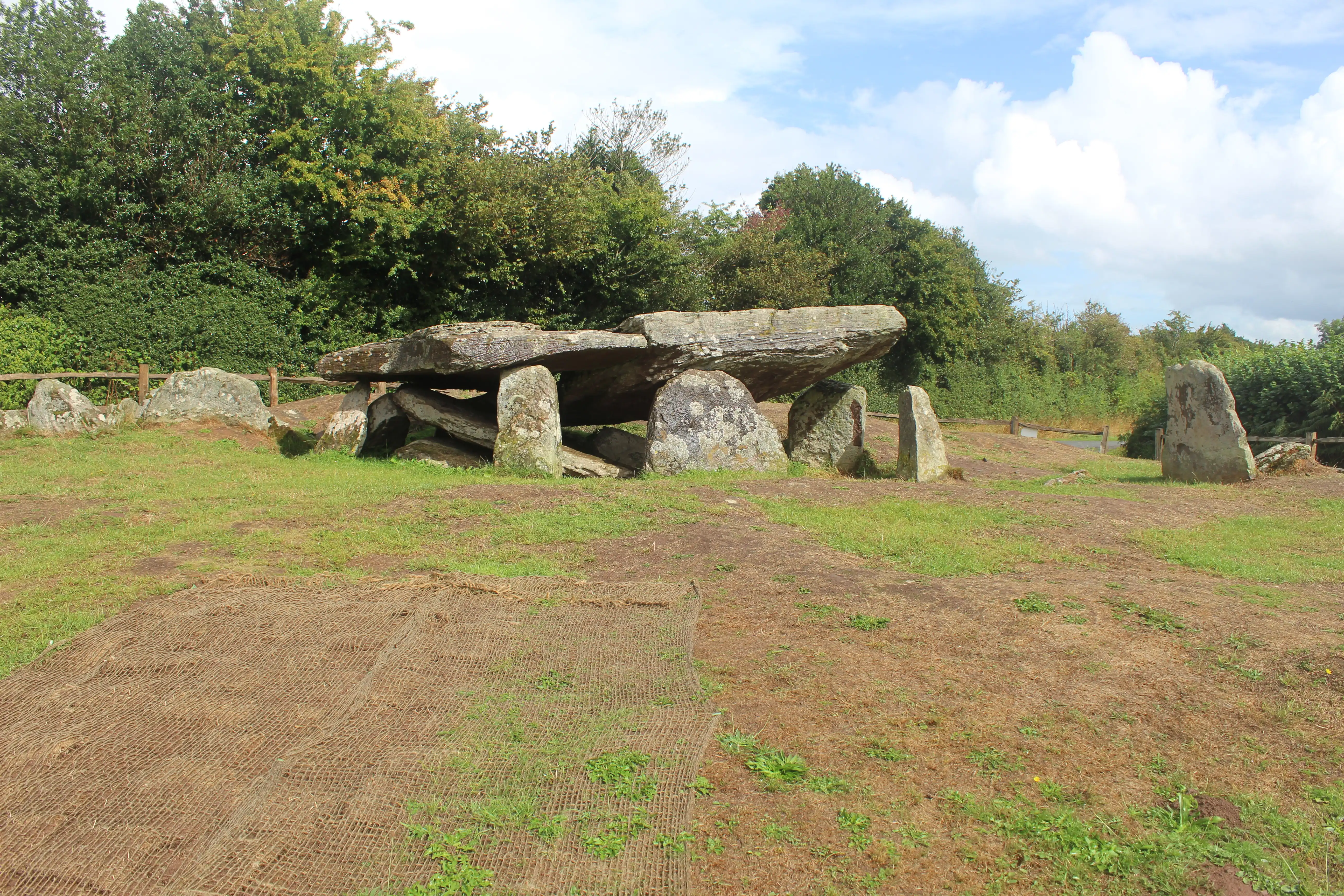
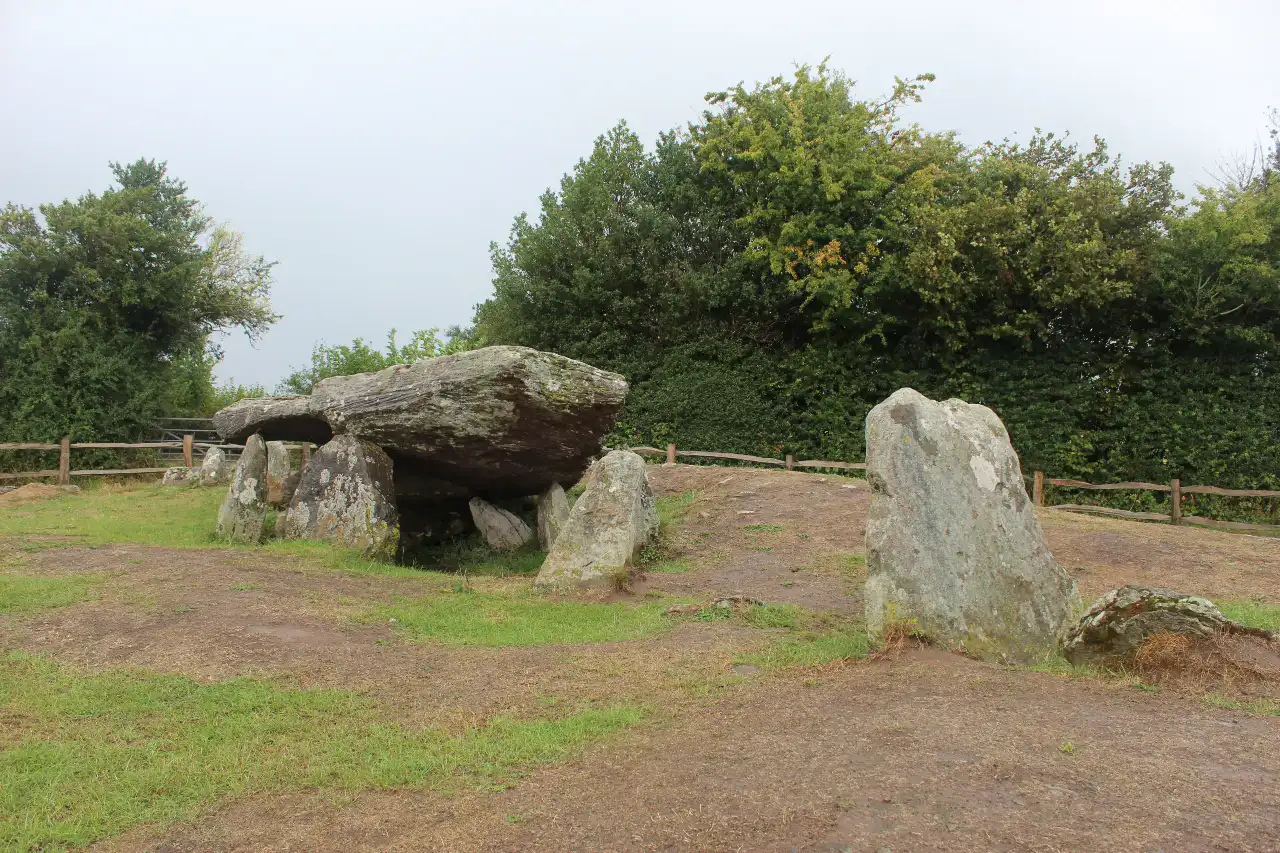
Arthur’s Stone is a stone structure located 2¾ miles south of Willersley and 1 mile north of Dorstone, just off the road that leads to Pen-y-Moor Farm. The mound stretches from north to south. Interestingly, the entrance to the main chamber turns from north to northwest.
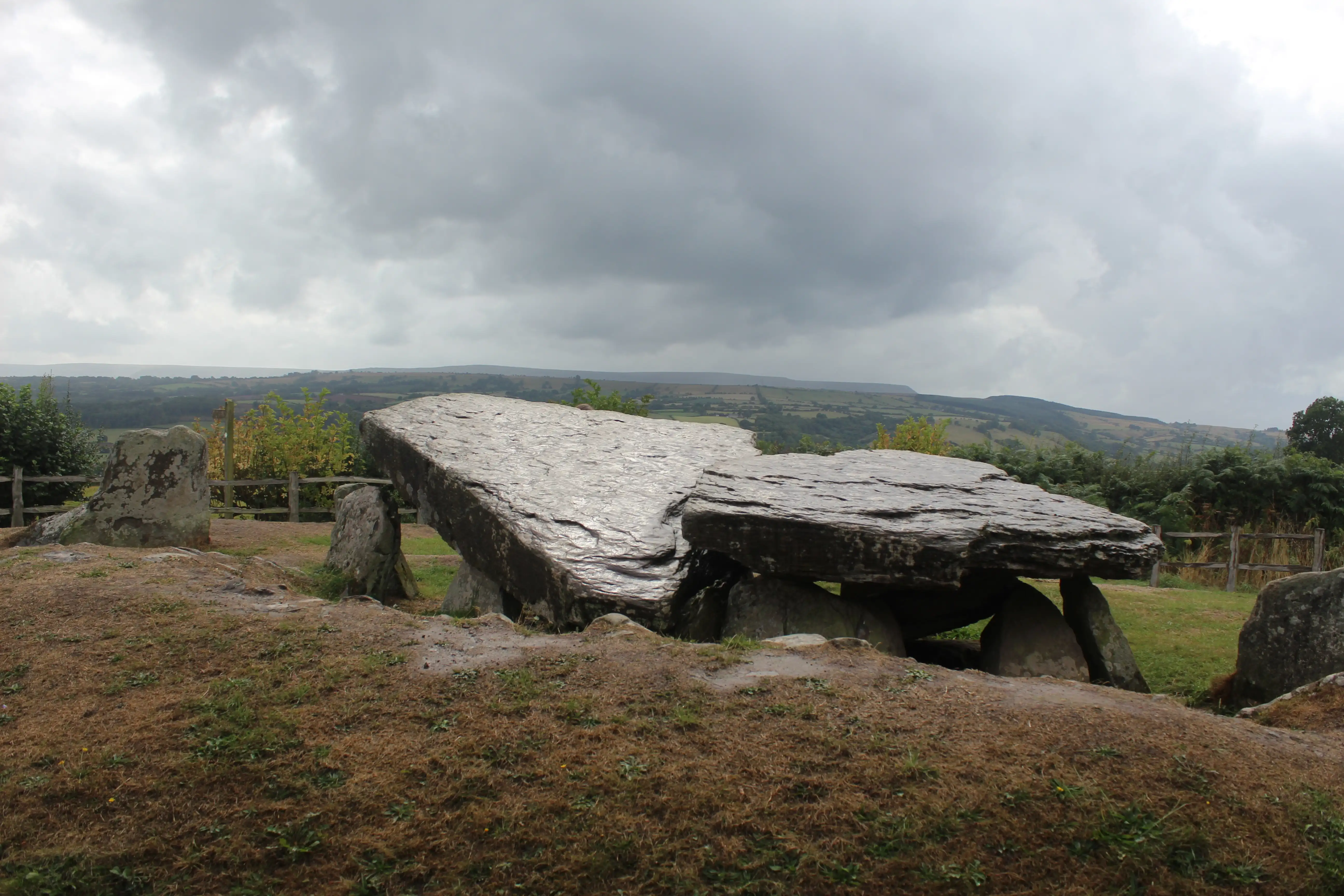
The mound is at least 85 feet long. The main chamber is oval, measuring 18 by 7 feet, and is topped with a large capstone that appears to have broken into three big pieces. The capstone was original a single enormous slab of red sandstone, roughly 18–20 ft (5.5–6 m) and estimated to weigh 25–40 tons (some sources put it closer to 30+ tons), making it one of the largest capstones on any British Neolithic chambered tomb. These pieces sit on nine upright stones. Additionally, there are two more stones found to the south of the main structure.
To the north of the chamber, three stones indicate the possibility of an antechamber, which can be reached through the passage. The two separate stones on the southern side might be leftovers from the perimeter structure. There are no records of any burials in this area. The bedrock here consists of Old Red Sandstone.
Archaeological Discoveries: Food for Thought
The first-ever formal excavations at Arthur's Stone began in 2021 and concluded in 2024. During these digs, archaeologists uncovered several skeletons within the passageway and chamber, along with traditional flint tools and prehistoric pottery. However, the most extraordinary discoveries were pieces of rare, perfectly clear rock crystal and unique, glass-like volcanic pitchstone rock. Furthermore, archaeologists unearthed a small stone box—known archaeologically as a cist—hidden within the structure that contained human remains. (4)
A New Perspective: The Pre-Younger Dryas Hypothesis
To me, the rare crystals and volcanic glass are the most significant and telling finds on the entire site. Traditional history suggests Neolithic people built this monument from scratch, but moving, lifting, and balancing a massive 30-tonne stone is simply unthinkable for that era and its primitive tools.
Instead, the physical evidence opens the door for the pre-Younger Dryas hypothesis. I believe an advanced, pre-cataclysm civilization—dating back before 12,000 BC—originally engineered this structure with a highly specific, technological purpose: to act as an indestructible, armored vault to store or protect things like priceless crystalline and volcanic materials inside the central stone cist. The massive, immovable 30-tonne capstone was placed on top to permanently seal the vault.
When the global cataclysms of the Younger Dryas devastated the Earth, this advanced civilization was utterly lost, and their knowledge was forgotten. Thousands of years later, as nomadic Neolithic groups began to repopulate and roam the lands, they stumbled upon ancient ruins like Arthur's Stone. While they had no concept of its original technological or structural purpose, they clearly recognized the immense power and architectural greatness of what had been left behind. Viewing it as a sacred, supernatural place, they occupied the structure, eventually using it as a temple and a place to bury their own dead millennia after the vault was first sealed. (5)
The video and photographs belong to AwE130; nonetheless, you are allowed to utilize them free of charge for non-commercial purposes, as long as you include a link back to this page as the source.
The legends of Arthur's Stone
The name Arthur's Stone stems from local legends dating back to before the 13th century. Medieval people had no scientific explanation for how such massive, 30-tonne rocks were moved. (1)
The Slain Giant (Herefordshire Legend)
The primary folklore surrounding the Herefordshire tomb is a tale of a fierce battle between King Arthur and a nameless giant. Arthur famously defeated and killed the giant on the ridge of Merbach Hill. According to the story, when the giant fell heavily to the earth, his elbows struck the massive red sandstone capstone. The legend claims that the physical indents and weathering marks still visible on the surface of the stone today are the permanent "elbow prints" left behind by the dying giant. (2)
The Stone in the Shoe (Gower Peninsula, Arthur's Stone)
There is a second famous ancient structure also called "Arthur's Stone" (Maen Cetti) over the border on the Gower Peninsula in Wales, their myths often intertwine.
(1) English Heritage (2) Herefordshire Legend (4) University of Manchester (5) Silurian hypothesis